
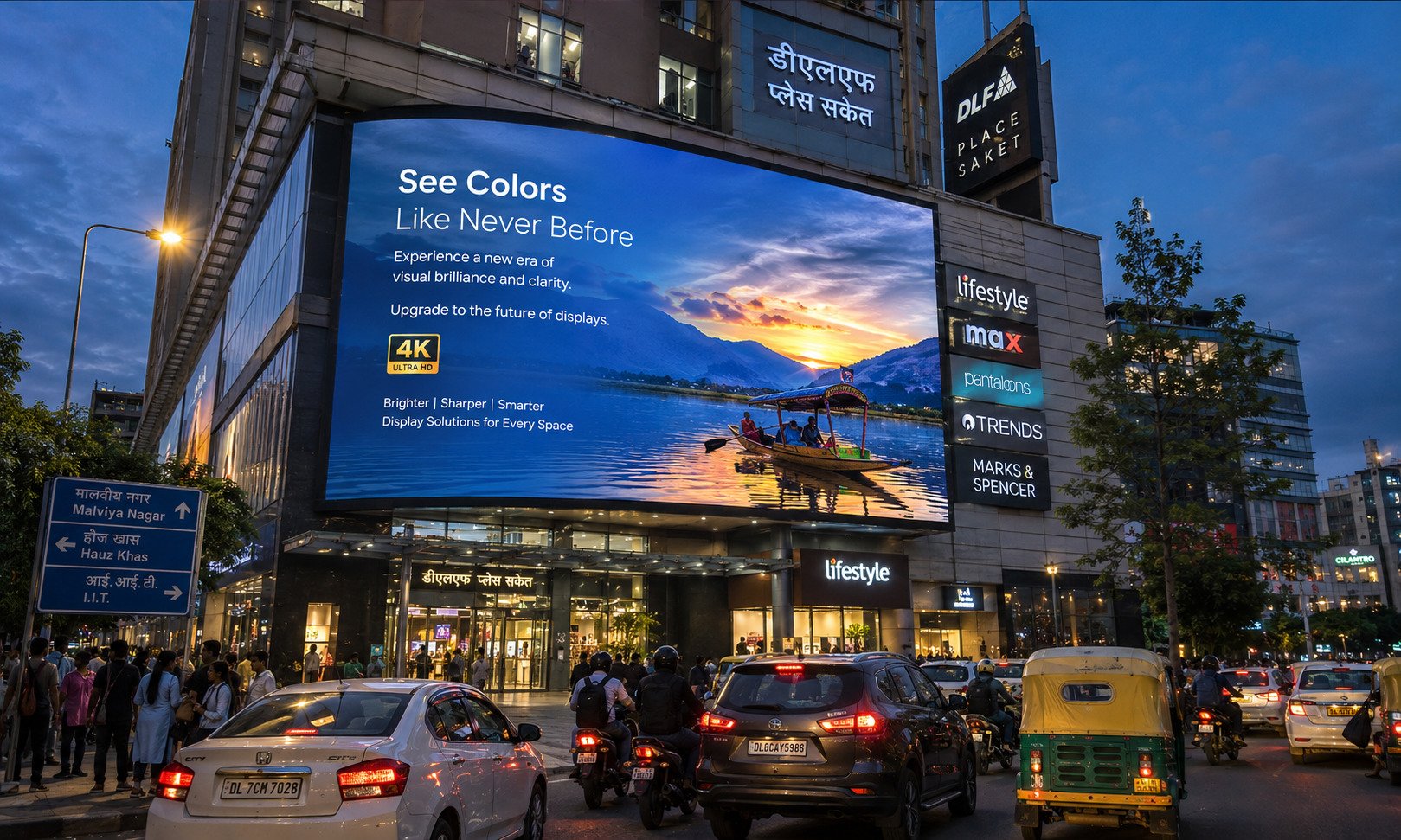
LED displays have become one of the most effective digital advertising and communication tools for businesses worldwide. From shopping malls and retail stores to highways and stadiums, LED screens are helping brands attract attention with bright and engaging visuals. However, when investing in LED display technology, one of the most important decisions businesses must make is choosing between indoor and outdoor LED displays.
Both indoor and outdoor LED displays offer unique advantages and are designed for different environments. Understanding the differences between these two types of LED screens can help businesses select the right solution for their marketing and communication needs.
What Are LED Displays?
LED displays are digital screens that use Light Emitting Diodes to produce high-quality visuals, videos, and animations. These screens are known for their brightness, energy efficiency, and long operational life. Businesses use LED displays for advertising, promotions, information sharing, live events, and branding purposes.
Modern LED displays are highly customizable and available in various sizes and resolutions. They can display dynamic content in real time, making them far more effective than traditional static advertising methods.
The two primary categories of LED displays are indoor LED displays and outdoor LED displays. While both serve similar purposes, their design, brightness, and technical specifications differ significantly.
Understanding Indoor LED Displays
Indoor LED displays are specifically designed for enclosed environments where lighting conditions are controlled. These displays typically offer higher resolution and smaller pixel pitch because viewers are usually closer to the screen.
Indoor LED displays are commonly installed in shopping malls, retail stores, conference rooms, hotels, airports, educational institutions, and exhibition halls. Their sharp image quality and vibrant colors make them ideal for presentations, advertising, and customer engagement.
One of the biggest advantages of indoor LED displays is their superior visual clarity. Since indoor audiences view screens from shorter distances, high-resolution visuals are essential. Indoor LED screens deliver detailed images and smooth video playback that enhance the viewing experience.
Another benefit is their sleek and lightweight design. Indoor displays are easier to install and can be integrated into modern interiors without occupying too much space. Businesses often use indoor LED video walls to create immersive visual experiences in reception areas, meeting rooms, and retail environments.
Indoor LED displays also consume less power compared to outdoor screens because they require lower brightness levels. This makes them energy efficient and cost-effective for long-term indoor use.
Understanding Outdoor LED Displays
Outdoor LED displays are built for external environments where screens must remain visible under direct sunlight and harsh weather conditions. These displays are designed with high brightness levels, weatherproof materials, and durable protective coatings.
Outdoor LED displays are widely used for digital billboards, sports stadiums, transportation hubs, public advertising, and large outdoor events. Their powerful brightness ensures that content remains visible even during daytime.
Durability is one of the key features of outdoor LED displays. These screens are resistant to rain, dust, heat, and extreme weather conditions. Advanced protective technology helps maintain performance and reliability over long periods.
Outdoor LED displays typically have larger pixel pitches because viewers usually watch them from greater distances. While the resolution may not appear as sharp when viewed closely, the visuals remain clear and impactful from far away.
Businesses prefer outdoor LED advertising because it allows them to reach large audiences in high-traffic areas. Digital billboards can display multiple advertisements throughout the day, increasing marketing flexibility and revenue opportunities.
Key Differences Between Indoor and Outdoor LED Displays
The primary difference between indoor and outdoor LED displays is brightness. Outdoor displays require much higher brightness levels to remain visible in sunlight, while indoor displays operate efficiently with lower brightness.
Another major difference is weather resistance. Outdoor LED screens are designed to withstand environmental conditions such as rain, dust, and temperature changes. Indoor displays do not require such protection because they operate in controlled environments.
Resolution and pixel pitch also vary between the two. Indoor LED displays generally offer smaller pixel pitches for close viewing distances, while outdoor screens use larger pixel pitches for long-distance visibility.
Installation costs can differ as well. Outdoor LED displays are usually more expensive due to their weatherproof design, structural support requirements, and higher brightness technology.
Which LED Display is Best for Your Business?
Choosing between indoor and outdoor LED displays depends entirely on your business goals and installation environment.
If your business operates inside shopping malls, conference centers, retail stores, or corporate offices, an indoor LED display is the ideal choice. These displays provide excellent image quality and create engaging customer experiences in indoor settings.
On the other hand, if your goal is to advertise in public spaces, highways, stadiums, or outdoor venues, outdoor LED displays offer better visibility and durability. They are designed to attract attention from long distances and perform reliably in all weather conditions.
Businesses should also consider viewing distance, screen size, content type, and budget before making a final decision. Working with a professional LED display provider can help ensure the right solution for your specific requirements.
Future of LED Display Technology
The LED display industry continues to evolve rapidly with innovations such as flexible LED screens, transparent displays, and MicroLED technology. These advancements are improving image quality, energy efficiency, and design flexibility.
As digital advertising continues to grow, both indoor and outdoor LED displays will become even more important for businesses seeking effective communication solutions.
Conclusion
Indoor and outdoor LED displays both offer significant advantages for businesses looking to improve advertising and communication. Indoor LED screens deliver high-resolution visuals and immersive customer experiences, while outdoor LED displays provide unmatched visibility and durability for large-scale advertising.
Understanding the differences between these display types is essential for making the right investment. By choosing the appropriate LED display solution, businesses can strengthen brand visibility, engage audiences more effectively, and stay competitive in the digital age.